
Qonnected
job done

_edited.jpg)
op het moment dat bedrijven het nodig hebben en zoeken; aan het begin van nieuwe bouwprojecten.
op elke datum en tijd, op elke plaats; ook op de bouwplaats.
Wij bieden ook
bouwmaterialen circulair aan*
En zorgen voor het vervoer
Alles in één keer geregeld!
Wij zijn geen recyclingbedrijf en ook geen gebruiker. van bouwmaterialen.
Wij bepalen ook niet welke materialen er gebruikt worden of tegen welke prijs. U kiest!
Maar, omdat we op het Q-Platform inzicht hebben in de gehele toeleveringsketen van het gebruik van bouwmaterialen, inclusief het transport zelf, fungeren we als faciliterende partij voor alle initiatieven op het gebied van circulariteit van bouwmaterialen.
We beschikken over alle middelen om dit mogelijk te maken.
HERGEBRUIK nieuwe producten
HERGEBRUIK gebruikte producten
Op ons bestelplatform, dat door onze klanten wordt gebruikt, bieden we zogenaamde 'tweede kans'-producten aan.
Alle bouwmaterialen die via het Q-platform worden verwerkt en na afronding van projecten ongebruikt blijven, kunnen onze klanten naar eigen inzicht hergebruiken in andere projecten of als "tweede kans" opnieuw aanbieden via Qonstruct.
En ja, we kennen alle specificaties, weten waar ze zich bevinden en kunnen ze gemakkelijk naar een ander project overbrengen... allemaal in het Q-Platform.
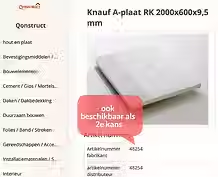
We beheren een marktplaats, Qonstruct.eu, waar een koper van bouwmaterialen ervoor kan kiezen om deze producten te gebruiken omdat de specificaties minder belangrijk zijn.
Dit is ook beschikbaar voor particulieren.
We weten waar ze zijn, kunnen ze vervoeren en bezorgen... net als in een webshop....
Verstrekken van ESG-informatie en meer.
Verzamelen en bijeenbrengen van bouw afval
Op ons bestelplatform Qonstruct.eu, dat door onze klanten wordt gebruikt, bieden we informatie (de specificaties) van alle beschikbare producten.
Waar mogelijk voegen we ook alle ESG-informatie toe, inclusief een zogenaamd materialenpaspoort.
Als een fabrikant niet over een dergelijk paspoort beschikt, helpen wij bij het verkrijgen van het Q-certificaat.
Het is voor onze klanten eenvoudig om de beste producten te kiezen.
_edited.png)
Via ons bestelplatform, dat door onze klanten wordt gebruikt, bieden we de mogelijkheid om het retourtransport van bouwafval bij leveringen te voegen. Deze materialen kunnen worden opgeslagen totdat een aangewezen partij ze ophaalt, of we kunnen het volledige transport naar hun locatie verzorgen.
Wij verzorgen alle rapportages.
Momenteel wordt de afvalverwerking uitgevoerd door een bedrijf die door onze klanten is aangesteld.
Mocht u uw diensten echter geïntegreerd via ons Q-Platform willen aanbieden, neem dan contact met ons op!
wat we al doen
.png)
U bent een recycler? Connecteer met het Q-platform.Wij leveren de producten bij u af!
U haalt energie uit bv verbranding? Connecteer met het Q-platform.
Wij leveren de producten bij u af!
U repareert? Connecteer met het Q-platform.Wij leveren de producten bij u af!
direct de supply chain instappen?
Onze klanten vertrouwen erop dat wij hen helpen hun materiaalstromen circulair te maken.
Als u recycling- of aanverwante diensten aanbiedt en toegang wilt tot bouwmaterialenstromen, neem dan contact met ons op.

De regels in Nederland
In Nederland wordt het beheer van bouw- en sloopafval beheerst door strikte regels die gericht zijn op het bevorderen van duurzaamheid, het verminderen van de impact op het milieu en het aanmoedigen van recycling. De regels van het land voor het verwerken van bouwafval maken deel uit van het bredere milieubeleid en zijn in lijn met de richtlijnen van de Europese Unie over afvalbeheer. Hieronder staan de belangrijkste elementen van de Nederlandse regels voor bouwafval:
Afvalhiërarchie en circulaire economie
Nederland legt sterk de nadruk op de **afval hiërarchie**, die prioriteit geeft aan afvalpreventie, hergebruik, recycling en herstel vóór verwijdering. Het doel van de overheid is om in 2050 over te stappen op een circulaire economie, waarbij materialen worden hergebruikt en gerecycled om afval te minimaliseren.
Doelstellingen voor recycling en hergebruik
Nederland heeft hoge recyclingdoelen voor bouw- en sloopafval vastgesteld. Het land streeft ernaar om ten minste 90% van het bouwafval te recyclen, een doel dat grotendeels wordt gehaald. Deze recycling omvat het breken van beton en bakstenen voor gebruik als aggregaat in nieuwbouw, het hergebruiken van metalen en het recyclen van hout en andere materialen.
Bouwvergunningen en afvalbeheerplannen
In veel gevallen is het voor het verkrijgen van een bouw- of sloopvergunning nodig om een afvalbeheersplan** (Afvalbeheersplan) in te dienen. Dit plan moet aangeven hoe bouw- en sloopafval wordt behandeld, inclusief de stappen voor afvalscheiding, recycling en verwijdering. Gemeenten houden toezicht op de naleving van deze plannen.
Juridisch kader
Het beheer van bouwafval is in Nederland geregeld in verschillende wetten, waaronder:
Wet milieubeheer: Deze wet geeft het algemene kader voor het afvalbeheer in het land.
Bouwbesluit 2012 : Deze wet stelt eisen aan bouwen en slopen, waaronder regels over de omgang met afvalstoffen.
Besluit bodemkwaliteit : Dit besluit regelt het gebruik van gerecyclede materialen en zorgt ervoor dat deze de bodem of het grondwater niet verontreinigen.
Scheiding en sortering van afval
Nederlandse regelgeving vereist dat bouw- en sloopafval bij de bron wordt gesorteerd. Materialen zoals hout, metalen, beton, bakstenen en gevaarlijk afval (bijv. asbest) moeten worden gescheiden om recycling te vergemakkelijken. Goed gesorteerd afval helpt de hoeveelheid materiaal die naar stortplaatsen wordt gestuurd te verminderen en vergroot de kans op hergebruik in nieuwe bouwprojecten.
"Gevaarlijk afval" management
Bouwafval dat gevaarlijke materialen bevat, zoals asbest of lood, is onderhevig aan strenge regelgeving. Deze materialen moeten worden verwijderd door gecertificeerde professionals en afgevoerd in overeenstemming met de milieuwetgeving. Asbest in het bijzonder heeft specifieke verwerkingsregels vanwege de gevaarlijke effecten op de gezondheid.
Stortplaatsbeperkingen en -kosten
Nederland heeft stortbelastingen en beperkingen op bepaalde soorten afval ingevoerd om storten op stortplaatsen te ontmoedigen. Hoge stortkosten maken het voor bouwbedrijven financieel voordelig om afval te recyclen in plaats van het te storten. Alleen materialen die niet gerecycled of hergebruikt kunnen worden, mogen worden gestort.
Handhaving en inspecties
Lokale overheden en milieuagentschappen zijn verantwoordelijk voor het handhaven van afvalbeheerregels. Regelmatige inspecties worden uitgevoerd om naleving van de regelgeving voor sorteren, recyclen en afvoeren te garanderen.